
How to Print Onto T-Shirts: A Complete Guide for Australian Organisations
Learn how to print onto t-shirts in Australia — covering decoration methods, costs, MOQs, artwork tips, and how to choose the right supplier.

Written by
Darcy Flynn
Custom Apparel
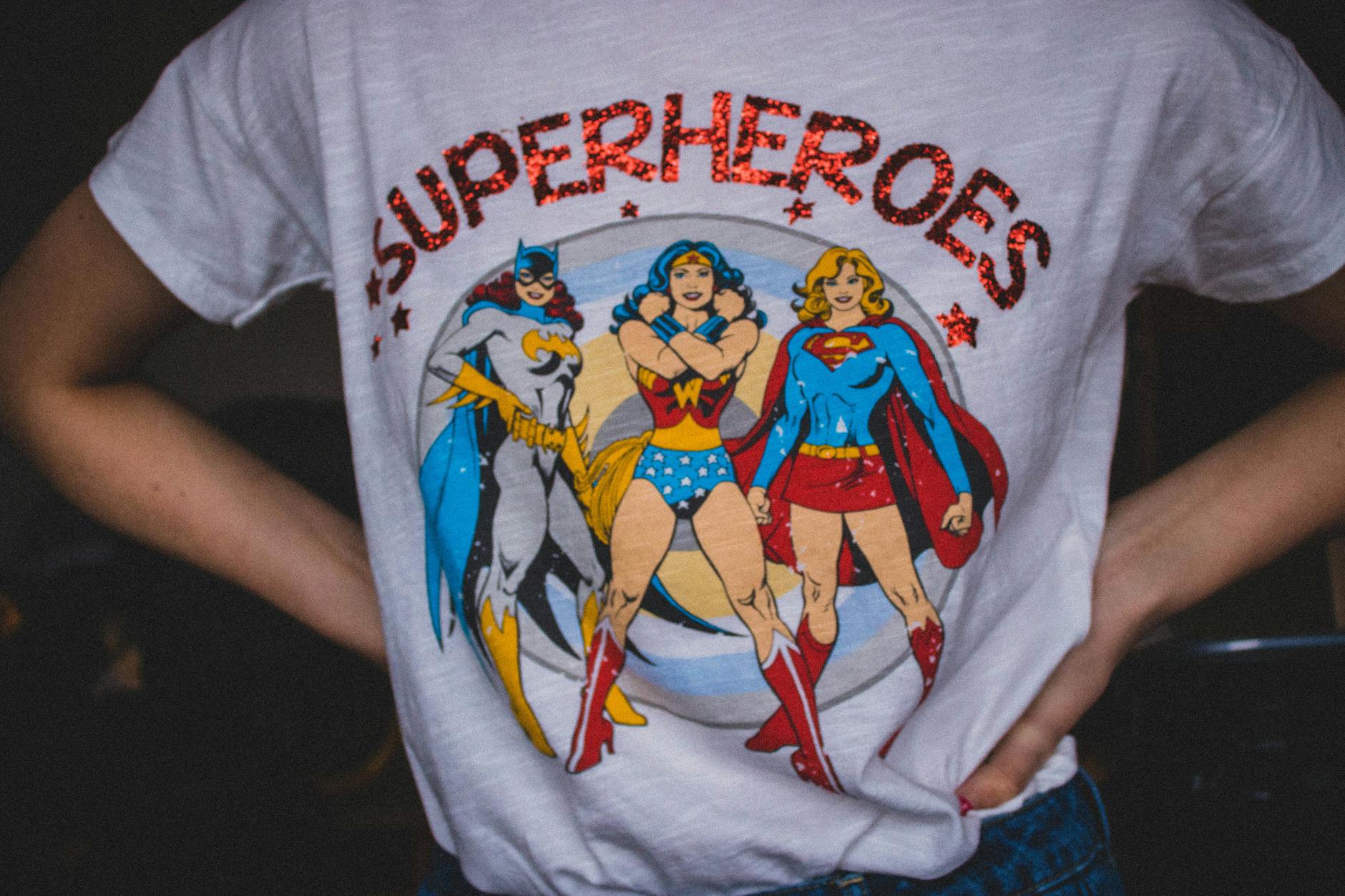
There’s a reason custom t-shirts remain one of the most popular promotional products in Australia year after year. Whether you’re outfitting staff at a Sydney trade show, organising school sports day gear for a Brisbane primary school, or creating merchandise for a Gold Coast charity fun run, the ability to print onto t-shirts gives your organisation a powerful, wearable branding tool that keeps working long after the event is over. But if you’ve never ordered custom printed tees before, the process can feel a little overwhelming. What printing method should you use? How many do you need to order? What does your artwork file need to look like? This guide answers all of those questions and more.
Why Printing Onto T-Shirts Is Such an Effective Branding Strategy
Before we dive into the practical details, it’s worth understanding why branded t-shirts punch so far above their weight as a promotional product. Unlike a pen or a notepad — both excellent items in their own right, as we explore in our guide to promotional notebooks — a t-shirt is worn in public. Every time someone wears your branded tee, they become a walking advertisement for your organisation.
Research into promotional products and consumer behaviour in Australia consistently shows that wearable merchandise generates the highest brand impressions per item. A single custom t-shirt worn regularly over a year can generate thousands of impressions across shopping centres, parks, gyms, and neighbourhoods. For small businesses, community organisations, and event planners, that kind of reach is genuinely hard to replicate through paid advertising at the same cost.
Custom t-shirts also carry a strong emotional association. When someone receives a quality branded tee — say, at a staff team-building day or a community festival — they connect that positive experience with your brand. That’s powerful.
Understanding the Main Methods Used to Print Onto T-Shirts
Not all decoration methods are created equal, and choosing the right technique depends on your artwork, your quantities, your budget, and the look you’re going for. Here’s a breakdown of the most common options available to Australian organisations.
Screen Printing
Screen printing is the industry workhorse for custom t-shirts. It involves creating a stencil (or “screen”) for each colour in your design and pressing ink directly through the screen onto the fabric. The result is vibrant, durable, and cost-effective — particularly once you scale up to larger quantities.
Screen printing is ideal when you have a bold, simple design with a limited number of colours (typically one to six). It’s the go-to method for sporting clubs, schools, and events ordering 50 or more units. The setup costs can be higher per unit at low quantities, but the per-unit price drops significantly as volumes increase.
Direct-to-Garment (DTG) Printing
DTG printing works similarly to a standard inkjet printer, but instead of paper, the machine prints directly onto the fabric. This method excels at reproducing complex, full-colour artwork — photographs, gradients, intricate illustrations — with no minimum colour restrictions.
The trade-off is that DTG works best on 100% cotton garments and can be less cost-effective for large runs. It’s a brilliant option for smaller orders (sometimes with no MOQ at all) or when you need a highly detailed design that screen printing simply can’t replicate cleanly.
Heat Transfer Printing
Heat transfer involves printing your design onto a special transfer paper or film, then pressing it onto the garment with a heat press. It’s a versatile method that suits small runs and allows for full-colour designs without the setup costs associated with screen printing.
Standard vinyl heat transfers are popular for names and numbers on sporting jerseys. More advanced options like digital heat transfers can replicate complex artwork effectively.
Sublimation Printing
Sublimation is a dye process where heat converts ink into gas, which then bonds permanently with synthetic fibres. The result is a print that’s completely integrated into the fabric — it won’t crack, peel, or fade. It’s perfect for polyester garments and activewear.
The limitation is that sublimation only works on white or very light-coloured synthetic fabrics. For event organisers creating vibrant, all-over print activewear (think fun run singlets or team sports tees), sublimation is outstanding.
Embroidery
Technically not “printing,” but embroidery deserves a mention here because it’s a common alternative for corporate t-shirts and polo shirts where a premium, textured look is preferred. Logos stitched onto a polo chest pocket project professionalism and durability. For organisations balancing branded apparel with branded accessories, you might also consider how embroidery complements products like trucker caps or trucker cap hats as part of a complete branded uniform package.
Key Factors to Consider Before You Order
Artwork Requirements
This is where many first-time buyers get caught out. To print onto t-shirts professionally, you’ll need vector artwork files — typically an .ai, .eps, or high-resolution .pdf format. These file types allow the design to be scaled up or down without losing quality.
If your logo only exists as a low-resolution JPEG or a file pulled from a website, it will need to be redrawn by a graphic designer before printing. Many suppliers offer artwork recreation services for a fee, so it’s worth asking upfront rather than discovering this issue at the last minute.
For screen printing specifically, your artwork should also indicate Pantone (PMS) colour references so the printer can match your brand colours precisely. This matters enormously for organisations with strict brand guidelines.
Minimum Order Quantities (MOQs)
MOQs vary significantly by printing method:
- Screen printing: Typically 12–24 units minimum, though some suppliers require 50+ for the economics to work well
- DTG printing: Often 1–12 units; ideal for small or one-off orders
- Heat transfer: Usually 6–24 units depending on the supplier
- Sublimation: Typically 12–25 units for cut-and-sew custom garments
If you’re a small business or a community organisation needing just a handful of shirts, DTG or heat transfer may be your most practical options. Larger organisations — say, a Perth council department ordering uniforms for 200 staff — will typically find screen printing or embroidery most cost-effective at scale.
Turnaround Times
Standard turnaround for custom printed t-shirts in Australia typically runs between 10–15 business days from artwork approval, though many suppliers offer express services (at a premium) that can turn orders around in 5–7 business days. Always build in buffer time when ordering for a specific event. Shipping from Melbourne to Darwin, for example, can add several days to your delivery timeline.
If you’re sourcing custom t-shirts as part of a broader merchandise package — perhaps alongside pull-up banners for an expo booth, or promotional tote bags for a conference delegate pack — confirm all lead times together so everything arrives before your event.
Budget Considerations
Pricing to print onto t-shirts varies widely depending on the garment quality, decoration method, number of print colours, and quantity ordered. As a rough guide for screen printing in Australia:
- Low-cost basic tees (24 units, 1 colour front print): $15–$22 per unit
- Mid-range garments (50 units, 2 colour front print): $18–$28 per unit
- Premium garments (100+ units, multi-colour front and back): $20–$35+ per unit
These figures are approximate and will vary by supplier, state, and garment brand. Setup fees (typically $50–$80 per colour per screen) are usually charged separately and become less significant per unit as quantities grow.
Don’t forget that the t-shirt itself is a significant part of the cost. There’s a broad spectrum from basic promotional tees through to premium retail-quality blanks. Choosing the right garment for your use case matters — a giveaway tee at a trade show doesn’t need to be the same quality as a staff uniform worn daily.
Practical Tips for Getting the Best Results
Request a Pre-Production Sample
For any order over 50 units, it’s worth requesting a physical sample or at minimum a digital proof before approving the full run. This lets you check colour accuracy, placement, and sizing before committing to the entire quantity.
Think About Placement
The most common print locations are centre chest (front), full back, left chest, and sleeve. Centre chest and full back prints are most visible and tend to work well for events and merchandise. Left chest prints have a more corporate or uniform feel, similar to embroidery placement on a polo shirt.
Size Runs and Unisex vs Fitted Styles
When ordering for a diverse group — say, a school, a charity team, or a corporate staff pool — think carefully about size distribution. A common split for adult corporate orders is to order proportionally more M, L, and XL sizes than XS and XXS. Also consider whether a unisex fit or a women’s fitted cut is more appropriate for your audience.
Coordinate Your Broader Merchandise Strategy
T-shirts rarely stand alone as a branding exercise. Many of Australia’s most effective promotional product businesses use custom apparel as the centrepiece of a broader merchandise package. Pairing branded tees with items like reusable coffee cups, branded summer gifts for customers, or even eco-friendly recycled jackets for outdoor brands creates a cohesive brand experience that leaves a lasting impression.
For organisations looking at the full picture, it helps to work with a reputable promotional products company in Australia that can manage multiple product categories and decoration methods under one roof.
Conclusion: Key Takeaways for Printing Onto T-Shirts in Australia
Printing onto t-shirts is one of the most versatile and cost-effective branding decisions any Australian organisation can make. Whether you’re a small business in the Barossa Valley (where local promotional products play a key role in community branding) or a large corporation rolling out a national uniform refresh, the fundamentals remain the same.
Here are the most important things to remember:
- Choose your decoration method based on artwork complexity, quantity, garment type, and budget — screen printing for large runs with simple designs, DTG for small runs with complex artwork, sublimation for polyester activewear
- Prepare vector artwork files before you begin — this saves time, money, and frustration at the proof stage
- Always confirm MOQs, turnaround times, and setup fees upfront — these can significantly affect your overall budget
- Request a proof or sample for larger orders — catching a colour or placement issue before the full run is far cheaper than reprinting
- Think about your t-shirts as part of a broader merchandise strategy — coordinating apparel with complementary branded products amplifies your brand impact significantly
With the right preparation and a reliable supplier, custom printed t-shirts can become one of the most memorable and impactful investments your organisation makes in its brand.