
All-Over Print Techniques for Custom Apparel: A Complete Production Guide
Discover the best all-over print techniques for custom apparel production, from sublimation to AOP screen printing, with expert tips for Australian businesses.

Written by
Rani Gupta
Branding & Customisation
When it comes to making a lasting visual impact, few things rival the power of a garment covered edge-to-edge in bold, striking design. All-over print techniques for custom apparel production have evolved dramatically in recent years, opening up possibilities that were once reserved for major fashion labels or high-budget campaigns. Today, Australian businesses, sporting clubs, event organisers, and schools are increasingly tapping into these methods to create standout branded clothing that turns heads and tells a story. Whether you’re a Gold Coast surf brand launching a new seasonal range, a Sydney event management company dressing its team, or a Melbourne charity running a fundraising campaign, understanding the available techniques — and their trade-offs — is the first step toward a successful outcome.
What Is All-Over Printing and Why Does It Matter for Branded Apparel?
All-over printing (AOP) refers to any decoration method that allows a design to be applied across the entire surface of a garment — from collar to hem, seam to seam — rather than being restricted to a chest logo, sleeve panel, or back print. This approach creates a dramatically different aesthetic compared to traditional localised decoration, making garments feel more like premium fashion pieces than standard promotional merchandise.
For brands that want to differentiate themselves in a crowded market, AOP is a powerful tool. It allows for complex, full-coverage artwork including photographic imagery, gradient colour fields, repeating patterns, and abstract designs that simply can’t be achieved through standard screen printing or embroidery. This is particularly valuable in industries where visual identity is central to the brand experience — think fitness, fashion, events, hospitality, and sport.
It’s also worth noting that AOP apparel commands a higher perceived value than basic branded tees or polos, which can be an important consideration when selecting promotional products for businesses looking to leave a memorable impression.
The Four Main All-Over Print Techniques Explained
Understanding which technique suits your project requires looking at how each process works, what substrates it’s compatible with, and what kind of results it delivers.
1. Dye Sublimation Printing
Sublimation is widely regarded as the gold standard for all-over apparel printing, particularly for performance and sportswear. The process involves printing a design onto special transfer paper using sublimation inks, then applying heat and pressure to transfer the design into the fabric at a molecular level. The result is a print that becomes part of the fabric itself — it won’t crack, peel, or fade with regular washing.
The major caveat is that sublimation only works on polyester or polyester-blend fabrics (typically requiring at least 80% polyester content), and it produces the best results on white or very light-coloured base fabrics. Because the ink bonds with the polyester fibres, printing onto dark polyester can result in dulled colours.
For organisations sourcing custom activewear, sublimated team jerseys, or branded sportswear, sublimation is typically the recommended method. Minimum order quantities (MOQs) can vary, but many suppliers require a minimum of 10–20 pieces per run for custom sublimation work, while others may have higher thresholds for fully customised cut-and-sew garments.
Sublimation also pairs beautifully with eco-conscious product ranges. If your brand is exploring recycled PET branded jackets for outdoor eco brands, it’s worth checking whether your chosen fabric blend is compatible with sublimation inks before committing to artwork.
2. All-Over Screen Printing
Traditional screen printing is typically used for localised designs, but all-over screen printing extends this method to cover the full garment surface. The process involves printing the fabric panel or the cut pieces before they’re sewn together — sometimes called “print-before-cut” — allowing ink to reach all edges of the finished garment without the typical white border that results from printing on a finished tee.
All-over screen printing works across a wider range of fabric types, including cotton and cotton blends, which makes it suitable for casual apparel, tote bags, and lifestyle clothing. However, the process is less forgiving when it comes to photographic imagery or fine gradients. It excels with bold, flat-colour designs and graphic artwork.
Setup costs for all-over screen printing can be significant due to the multiple screens required (one per colour), making this method more cost-effective at higher volumes. It’s an excellent choice for Australian brands running large batch orders of branded streetwear, event merchandise, or uniform ranges. If you’re new to the screen printing vs. embroidery conversation, it’s also useful to understand where each sits in the context of broader promotional products company Australia offerings.
3. Direct-to-Film (DTF) Printing
Direct-to-film printing is one of the newer techniques reshaping the AOP landscape. In this process, artwork is printed onto a special film, which is then transferred to the garment using heat. Unlike direct-to-garment (DTG) printing, DTF doesn’t require the fabric to be pre-treated and works on a much wider range of materials including cotton, polyester, nylon, and blends.
DTF produces vibrant, high-detail results and handles photographic images and gradients well. It’s particularly useful for shorter runs and for garments where sublimation isn’t an option due to fabric composition. The prints have a slightly raised, tactile feel — noticeably different from the smooth finish of sublimation — which some brands embrace as part of their aesthetic.
For event merchandise that needs to be produced quickly across a variety of garment styles, DTF is increasingly popular with organisers in Brisbane, Adelaide, and Perth who need flexibility without sacrificing quality.
4. Direct-to-Garment (DTG) Printing
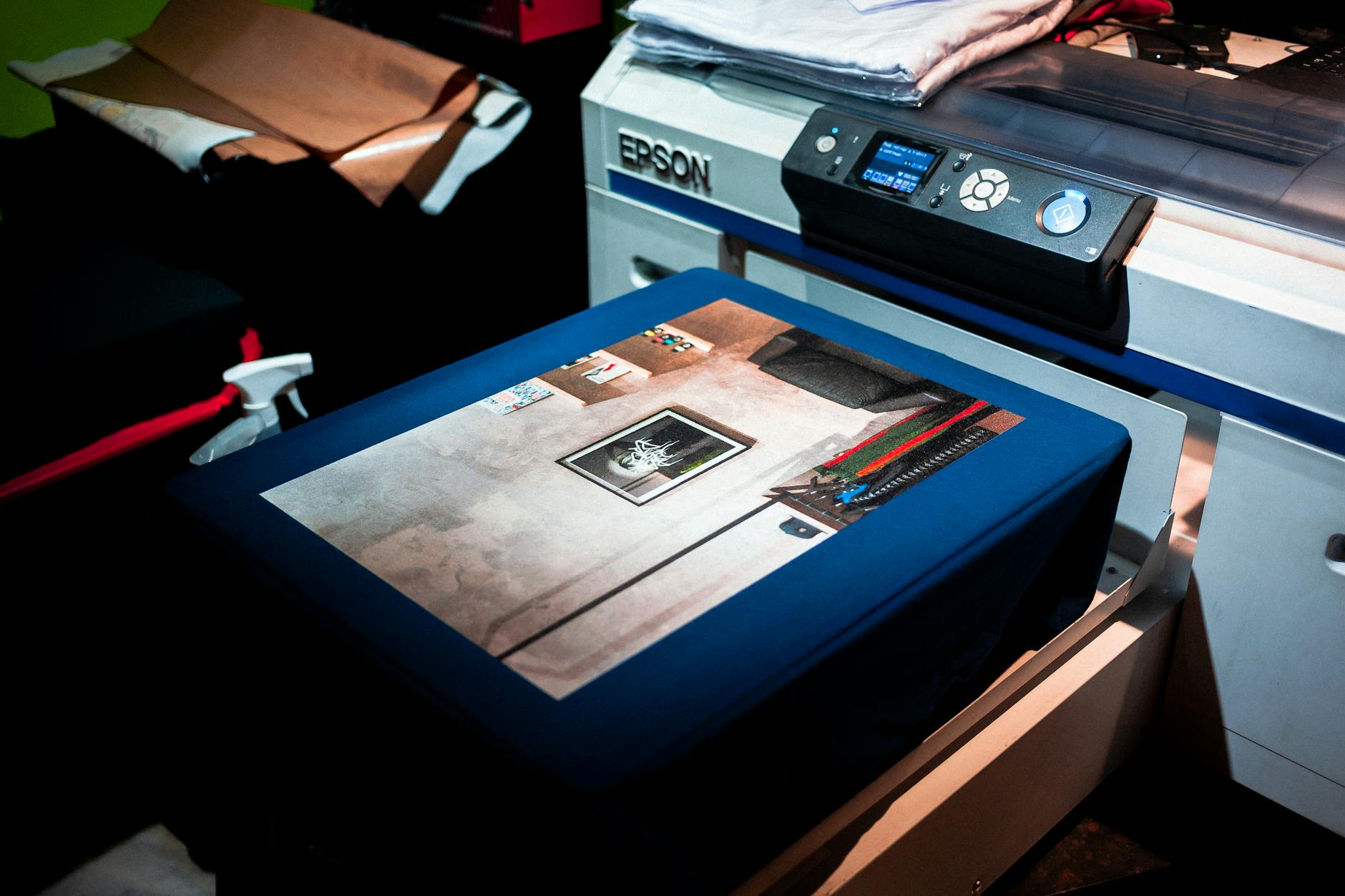
DTG printing involves applying ink directly onto the fabric surface using a modified inkjet printer. It’s best suited to 100% cotton or high-cotton-content garments and produces exceptional detail and colour accuracy. For all-over coverage, garments typically need to go through multiple printing passes, which can affect production time and cost at scale.
DTG works particularly well for short-run, highly individualised orders — such as personalised merchandise for conferences, team events, or retail drops where each garment may feature unique artwork or names. While it doesn’t replace sublimation or screen printing at volume, it fills an important gap for low-MOQ, high-customisation scenarios.
Choosing the Right Technique for Your Project
The “best” all-over print technique depends on several interconnected factors. Here’s a practical framework for Australian buyers:
Fabric Type and Garment Style
Start with the garment itself. If you’re working with polyester performance wear — think custom polo shirts, jerseys, or activewear — sublimation is almost always the right choice. For cotton casuals, consider DTG or screen printing. For mixed fabrics or unusual substrates, DTF offers the most versatility.
Order Volume and Budget
Screen printing becomes increasingly cost-effective as volumes rise, while DTF and DTG are better suited to smaller runs. Sublimation sits in the middle — it’s economical per unit at moderate quantities but requires investment in setup and can have higher base costs for custom cut-and-sew garments.
If you’re managing a tight budget, it’s worth exploring how all-over print costs compare to other branded merchandise investments, such as promotional tote bags, trucker caps, or reusable coffee cups, to ensure your spend is allocated where it creates the most impact.
Design Complexity and Colour Count
Photographic imagery, fine detail, and seamless gradients suit sublimation or DTF best. Bold, flat-colour graphics and logos are ideal for screen printing. DTG handles complexity well but is limited by fabric type.
Turnaround Requirements
Most AOP orders in Australia require a lead time of two to four weeks from artwork approval, though some suppliers offer express production for urgent requirements. Factor in shipping time, particularly if you’re ordering from a supplier interstate — for example, a Hobart-based organisation ordering custom sublimated hoodies may need to account for additional freight time compared to a Sydney buyer.
Artwork Preparation for All-Over Print Techniques
Good artwork is the foundation of any successful AOP project. Here are key preparation principles:
- Resolution: Artwork should be supplied at minimum 150 DPI at print size, though 300 DPI is preferred for photographic-quality results.
- Colour mode: Work in CMYK colour mode for print. RGB files converted at the last minute can shift colours unexpectedly.
- Bleed and seam allowance: Designs should extend beyond the garment edges (bleed) to ensure coverage to the seams. A decorator will advise on the specific bleed required for the garment template.
- Template alignment: AOP suppliers typically provide garment flat templates for each style. Designing within these templates ensures the artwork aligns correctly across panels once sewn.
This level of artwork preparation is similar in principle to what’s required for other detailed print projects, such as promotional beach towels in Melbourne, where edge-to-edge design placement requires careful attention to bleed and substrate specifications.
Washing, Care, and Longevity
Sublimation prints are exceptionally durable — the ink is embedded in the fibre rather than sitting on top of it, so there’s no cracking, peeling, or fading under normal wash conditions. Screen prints, when properly cured, also hold up well over time. DTF and DTG prints are durable but may require more careful washing (cold water, inside-out, no tumble dry) to maintain vibrancy.
Educating end users about care instructions is especially important for AOP garments distributed at events or as staff uniforms. Including a care label or tag with washing guidance is a simple but effective way to extend the life of the product.
Conclusion: Key Takeaways for All-Over Print Techniques for Custom Apparel Production
All-over print techniques for custom apparel production represent one of the most exciting areas of branded merchandise, offering Australian organisations an opportunity to create garments that genuinely stand out. Whether you’re producing sublimated jerseys for a Darwin sporting club, screen-printed streetwear for a Canberra retail brand, or DTF-printed event shirts for a large-scale Perth conference, understanding the fundamentals helps you make better decisions and get better results.
Here are the key points to remember:
- Match the technique to the fabric: Sublimation requires polyester; DTG works best on cotton; DTF and screen printing offer greater substrate flexibility.
- Consider volume and budget together: Screen printing rewards high volumes; DTF and DTG suit short runs; sublimation is cost-effective in mid-to-high volumes for custom sportswear.
- Invest in artwork quality: High-resolution, CMYK, bleed-ready files will determine the final quality of any all-over print job.
- Factor in lead times early: AOP production typically takes two to four weeks — plan accordingly, especially for event-driven deadlines.
- Think beyond apparel: All-over print principles apply to accessories too, so explore how decoration methods complement your broader merchandise strategy, from summer branded gifts for customers to branded trucker hats and beyond.
With the right supplier, the right technique, and well-prepared artwork, all-over printed apparel can become one of the most impactful elements of your brand’s visual identity.